


Survivor.io
4.563.46K Reviews
App Specs
- Version
- 5.2.0
- Updated On
- License
- Free
- Downloads
- 50,000,000+
- Developer
- Habby
- Categories
- Adventure
- Platform
- Android, iOS
Screenshots

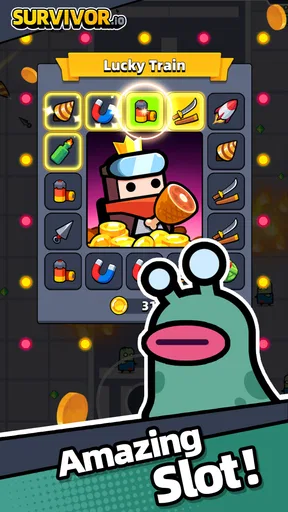
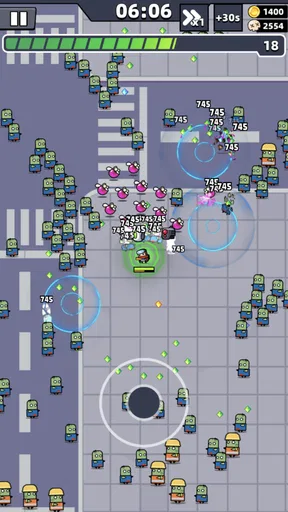
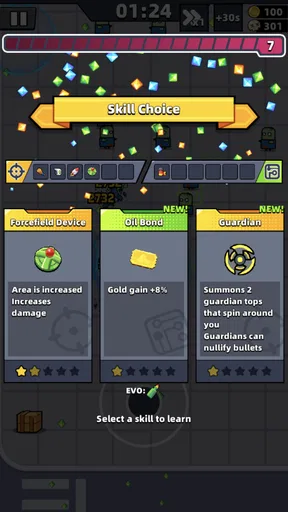
 Analysis by AppCompare
I approached Survivor.io as a quick action game, but its appeal is less about rushing forward than making small choices under pressure. Habby’s free adventure game drops you into battles against groups of monsters, where surviving means balancing movement, attacks, and upgrades rather than relying on one perfect move. It suits short breaks, though a run can pull me into another attempt when I want to improve on a rough result.
The basic idea is easy to grasp, which makes the game approachable if you do not usually play action-heavy mobile games. The challenge comes from keeping track of threats while deciding how to build your character as a run unfolds. I like that this creates a useful middle ground: there is enough decision-making to reward attention, but not so much planning that I need to study a guide before starting.
What a run asks of you
In practice, I treat movement as part of my offense and defense. Staying in one place may make it easier to focus, but enemies can close in quickly; moving without a plan can leave me chasing space instead of controlling it. I try to keep a route open, watch where the densest pressure is forming, and avoid getting boxed in while choosing upgrades. That simple habit makes a bigger difference than tapping frantically.
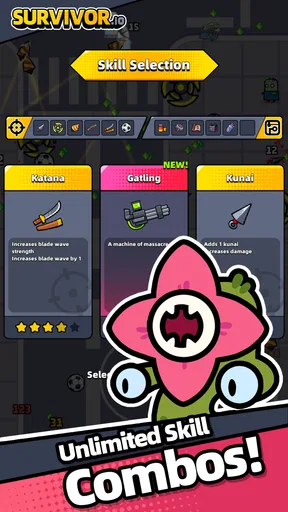
Upgrades are where a run gains its shape. Rather than assuming the most impressive-looking option is always best, I consider what is already working and what is becoming a problem. If enemies are crowding me, a choice that helps manage nearby threats may matter more than extra reach; if I can hold a safe lane, improving attacks that cover distance may be more useful. The trade-off is that a promising build can still be undermined by careless positioning.
Where it fits in a busy day
A realistic use case is a short wait between errands or a break when I want something more engaging than scrolling but do not want to commit to a long story. The straightforward premise lets me get going quickly, and each attempt gives me a clear chance to adjust how I move and choose upgrades. I would not start a run when I know I need to stop immediately, though: action can intensify, and a pause in the day is not always enough to finish comfortably.
Compared with a slower adventure game, this is built around immediate pressure rather than exploration and extended narrative. Compared with a simple arcade game, its upgrade choices give me more room to adapt instead of repeating the same action unchanged. That makes it a good fit if I enjoy reactive play with a little planning. If I want a calm game, a story-led journey, or precise tactical control, I would choose something else; the constant threat is central to the experience, not a temporary hurdle.
Getting Started with Survivor.io
So, what exactly is Survivor.io? Imagine a game where you’re thrust into a post-apocalyptic world, and your main goal is to, well, survive. Sounds intense, right? Well, it is, but in the most entertaining way possible. The game kicks off with a brief tutorial, which I found super helpful. It quickly gets you up to speed without dragging on, so you can jump right into the action.
Worth Reading Before You Choose

Flipboard Shows What News Apps Must Do Beyond the Feed

Switching to Android Auto Means Rethinking Your Driving Routine

Google Calendar Makes a Crowded Week Easier to Manage

Ludo King Makes the Most of the Minutes Between Plans

Baby Panda World Brings Quick Play to Modern Phones, but Its Game Library Feels Busy

ESPN’s Live Game View Makes Following Close Games Easier
Gameplay and Features
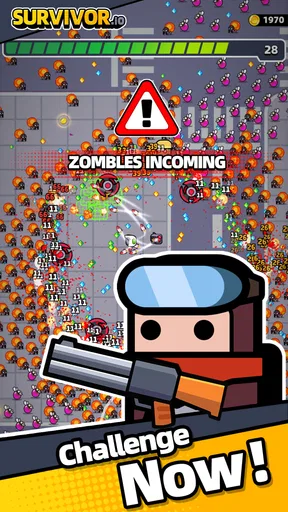
The gameplay in Survivor.io is pretty straightforward, yet it keeps you on your toes. You control a character whose mission is to fend off waves of enemies while collecting resources and upgrading your defenses. What I love about this game is how it balances strategy and action. You need to think about your next move while also reacting quickly to threats.
There’s a variety of weapons and power-ups to choose from, which adds a nice layer of depth. Whether you're a fan of sniping enemies from afar or prefer getting up close and personal with melee weapons, there's something for everyone. The game also offers a range of missions and challenges that keep things fresh and exciting.
Graphics and Sound
Visually, the game is a treat. The graphics are vibrant and detailed, making the post-apocalyptic world come alive on your screen. I was impressed by the attention to detail, from the character designs to the eerie landscapes. The sound design complements the visuals perfectly, with a soundtrack that ramps up the tension and sound effects that make each skirmish feel intense.
One practical tip I’d add is to make your choices deliberately rather than treating every upgrade as an automatic improvement. Think about whether your current problem is keeping enemies at a distance, dealing with pressure nearby, or staying mobile. Because the action keeps moving, a sensible choice for the situation can be more useful than an option that sounds powerful in isolation. This also gives each attempt a small learning loop: notice what caused trouble, then try a different response next time.
Who is likely to enjoy it
I’d recommend it most to players who like readable rules, hectic encounters, and the satisfaction of making a run work through a mix of movement and upgrade decisions. It is also approachable for someone curious about the adventure genre but not looking for a slow, elaborate introduction. The early tutorial helps establish the basics, while the pressure of later play gives experienced action-game fans something to respond to.
It is less suitable for anyone who dislikes repeated combat or wants every session to feel carefully scripted. The central loop asks you to handle waves of enemies again and again, and a run can go badly even when a build looked promising. If that kind of repetition feels like work rather than a chance to experiment, a puzzle adventure or a more narrative-focused game would probably be a better use of your time.
Making the most of upgrades and attempts
One useful way to play is to treat each run as a test, not just a pass-or-fail result. If you get overwhelmed, try to identify whether you were cornered, chose upgrades that did not address the immediate threat, or spent too long moving in a predictable path. Changing one decision at a time makes it easier to tell what helped. I also avoid choosing upgrades solely because they sound exciting; the best choice depends on the situation I am actually facing.
That approach matters because the game’s action can make decision-making feel rushed. I find it helpful to glance at the available choices before tapping, then commit and return attention to movement. It is a small habit, but it reduces the feeling that I am reacting blindly. Players who prefer to improvise can still do that, though a little deliberate thinking tends to make the run feel more controlled.
Progress, purchases, and practical expectations
The game is free to download, and its age guidance is Everyone 10+. Optional in-app purchases range from $0.49 to $199.99 per item, so I would check the purchase screen carefully and set device-level spending limits if children use the device. The broad price range is a reason to make a deliberate choice, not a reason to assume that spending is necessary. I would start by playing without paying and decide later whether any purchase makes sense for my own habits.
For someone wondering whether they need to spend money to enjoy it, my practical answer is to try the free game first and judge the experience on its own. Purchases can be tempting when a run is frustrating, but frustration is not a good moment to make an impulsive decision. If you are comparing it with another mobile action game, consider whether you want to pay for convenience or prefer a game whose appeal comes from learning the combat loop; those are different priorities.
It is also worth thinking about how you use your phone. The action and effects are easier to follow when the screen is not competing with glare or interruptions, and sound can add atmosphere when it is convenient to use. If you play in a shared space, muting the audio is an easy option, though you may lose some of the tension the sound design adds. I would keep sessions for moments when I can give the screen my attention rather than trying to play while walking or doing something that needs focus.
How it has evolved, and what remains to judge
The game was released on August 9, 2022, and version 4.4.3 is the current version. Those details show that it has continued to receive version changes since launch, but a version number alone does not tell me exactly which systems or balance decisions changed. I would not treat each update as proof that every part of the experience has been reworked. For an existing player, the sensible approach is to check the in-game update notes when available and see whether a change affects the way you build runs or approach challenges.
For newcomers, that ongoing version history is a reason to expect the game to be maintained, not a guarantee that the core loop will suit them. The parts that matter most to my decision are still the moment-to-moment combat, upgrade choices, and tolerance for repeated attempts. If those are enjoyable, a changed version can give returning players reasons to revisit the game; if the basic loop is not a fit, a newer version number will not turn it into a quiet exploration game.
Its audience figures suggest it has found a broad mobile player base: it has over 10 million installs, an average rating of 4.5, and around 1.1 million ratings. I read that as a sign that the concept has reached many players, not as a promise that every player will like the same parts. The useful question is whether you enjoy handling a busy screen and making quick choices; that is a more personal test than popularity.
What I would watch for as a player
When returning after time away, I would look first at what has changed in the current version rather than assuming my old habits still fit. Any adjustment to available options or challenge structure could affect the choices that once worked for me. That is a practical reason to experiment again instead of copying an old approach without checking how a run feels now. For a new player, I would give the tutorial and early attempts room to teach the basics before deciding whether the pressure is enjoyable.
I would also keep an eye on whether the game continues to offer enough variety in its missions and challenges for my own routine. A rotating sense of goals can make repeat play feel purposeful, but it does not remove the fact that the central experience is combat against waves. If I wanted a more substantial plot or a world I could explore at my own pace, I would choose a different adventure. If I wanted a quick, active session built around movement and build choices, this is much closer to what I would reach for.
Why You Should Try It
If you're still on the fence about downloading Survivor.io, let me give you a nudge. It's a game that offers a perfect blend of strategy and action, wrapped in a visually appealing package. Whether you're looking to kill some time or dive into a game for a longer session, this app has got you covered. Plus, the constant updates mean there’s always something new to look forward to.
In a nutshell, Survivor.io is a must-try for anyone who enjoys a good challenge and loves post-apocalyptic settings. With its engaging gameplay and stunning visuals, it’s no wonder it's gaining popularity among gamers. Trust me, you won't regret giving it a shot.
Pros
- Engaging gameplay with diverse challenges.
- Intuitive controls make it easy to learn.
- Vibrant graphics enhance the experience.
- Regular updates with new content.
- Multiplayer mode adds competitive fun.
Cons
- In-app purchases can be pricey.
- Occasional lag in multiplayer mode.
- Requires constant internet connection.
- Limited offline gameplay options.
- Battery drain on extended play sessions.
FAQs for Survivor.io
What is the main objective of Survivor.io?
Survivor.io is a survival action game where players must fend off waves of zombies using various weapons and skills. The main objective is to survive as long as possible while upgrading your character and equipment to handle increasingly difficult challenges. Players can engage in solo missions or team up with others for cooperative gameplay.
How does the level progression work in Survivor.io?
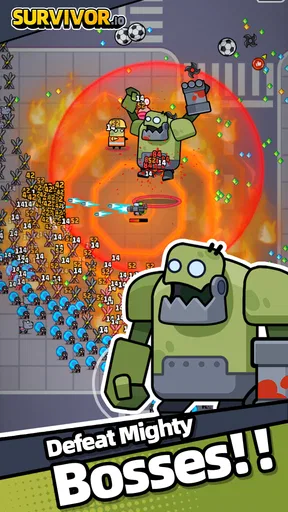
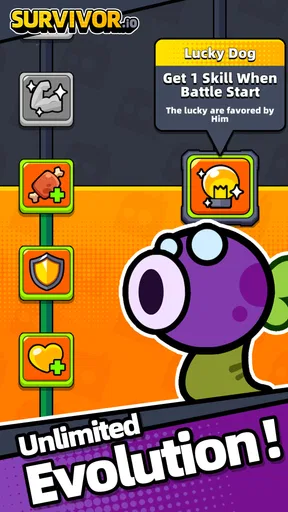
In Survivor.io, players gain experience points by defeating enemies and completing missions. These points are used to level up your character, improving attributes like health, attack power, and defense. As you progress, you unlock new skills and weapons, which are essential for tackling more challenging levels and bosses.
What are the in-app purchases available in Survivor.io?
Survivor.io offers a variety of in-app purchases that enhance gameplay. Players can buy coins, gems, and exclusive items that help speed up progress or unlock special characters and abilities. While purchases can provide advantages, the game can still be enjoyed and completed without spending money, as there are plenty of opportunities to earn rewards through regular play.
Is an internet connection required to play Survivor.io?
Survivor.io can be played both online and offline. However, certain features such as leaderboards, multiplayer modes, and some in-game events require an internet connection. Playing offline allows you to continue with single-player missions, but for a full gaming experience, an internet connection is recommended.
Are there any age restrictions for playing Survivor.io?
Survivor.io is generally suitable for players aged 12 and above, due to its cartoonish depiction of violence and strategic gameplay elements. Parents should be aware of the game's in-app purchase options and ensure that age-appropriate settings are configured on their child's device to prevent unauthorized transactions.


